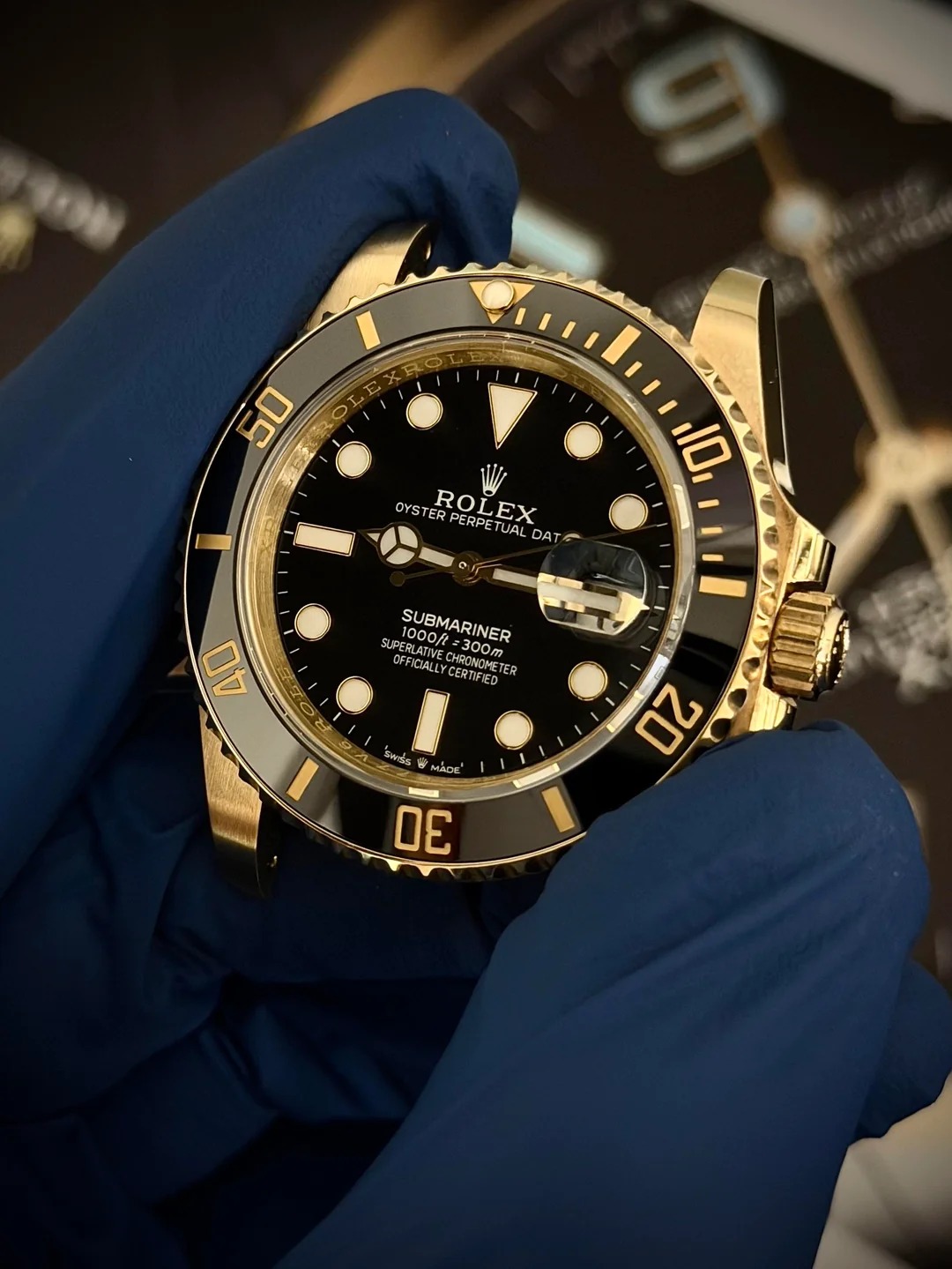
Gilded Standard
Gilded Standard
The Collection
A running archive of completed replating work — yellow, rose, white, and two‑tone gold, photographed as it comes off the line, component by component.
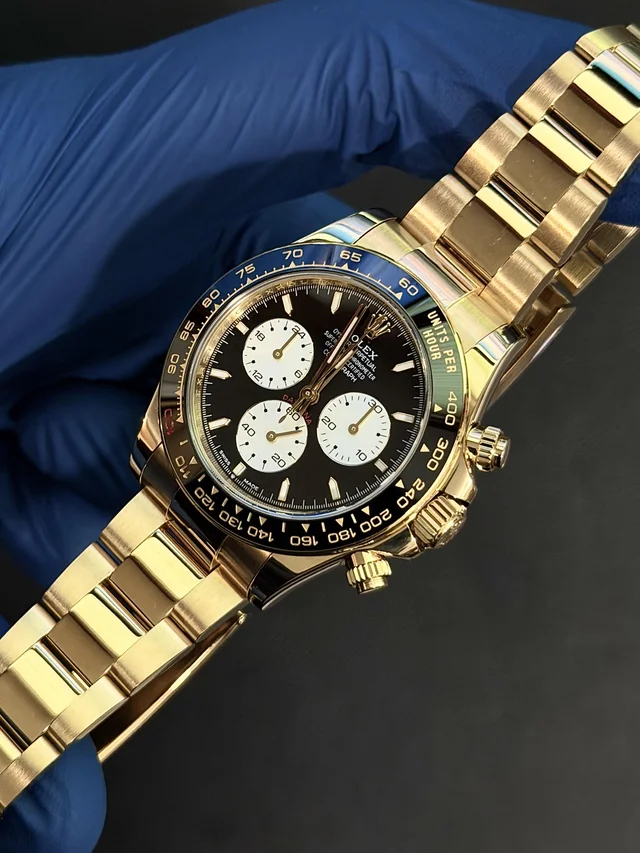
Featured Finish
Gold is not painted on. It is grown, molecule by molecule, onto a surface we spend as much time preparing as plating.
From the Archive
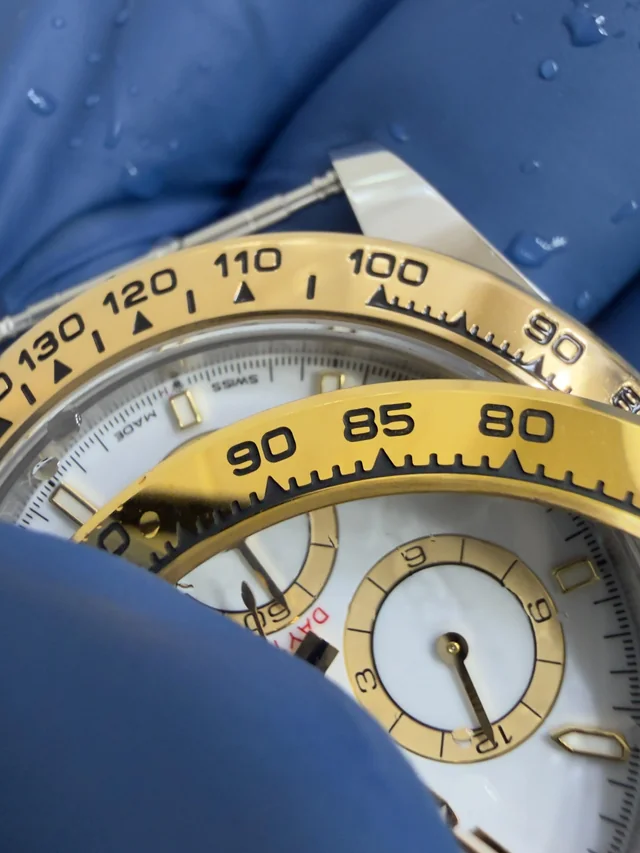
Look Closer
At this scale there is nowhere to hide an uneven edge, a soft corner, or a mismatched tone. Every bezel, link, and subdial is finished to hold up at macro distance, not just across the room.
From the Bench
Every finish is a process, not a product — five stages, in order, with no shortcuts between them.
The Process
Stage 01
Every component is disassembled down to the case, bracelet, bezel, and clasp, then stripped and polished to remove old plating, scratches, and oxidation before anything new goes on.
Stage 02
The bare metal is chemically activated in a series of baths that clean the surface at a microscopic level, so the new layers bond to the base metal rather than sitting on top of it.
Stage 03
A nickel barrier layer goes down first, sealing the base metal and giving the gold something stable and even to adhere to — the difference between a finish that lasts and one that doesn't.
Stage 04
The gold itself is deposited in a controlled electroplating bath, built up to thickness in the exact tone — yellow, rose, white, or two‑tone — matched against our reference library for that reference.
Stage 05
Brushed surfaces are re-grained, polished surfaces are brought back to a mirror, and the piece is reassembled and inspected under magnification before it goes back on the wrist.
Details